
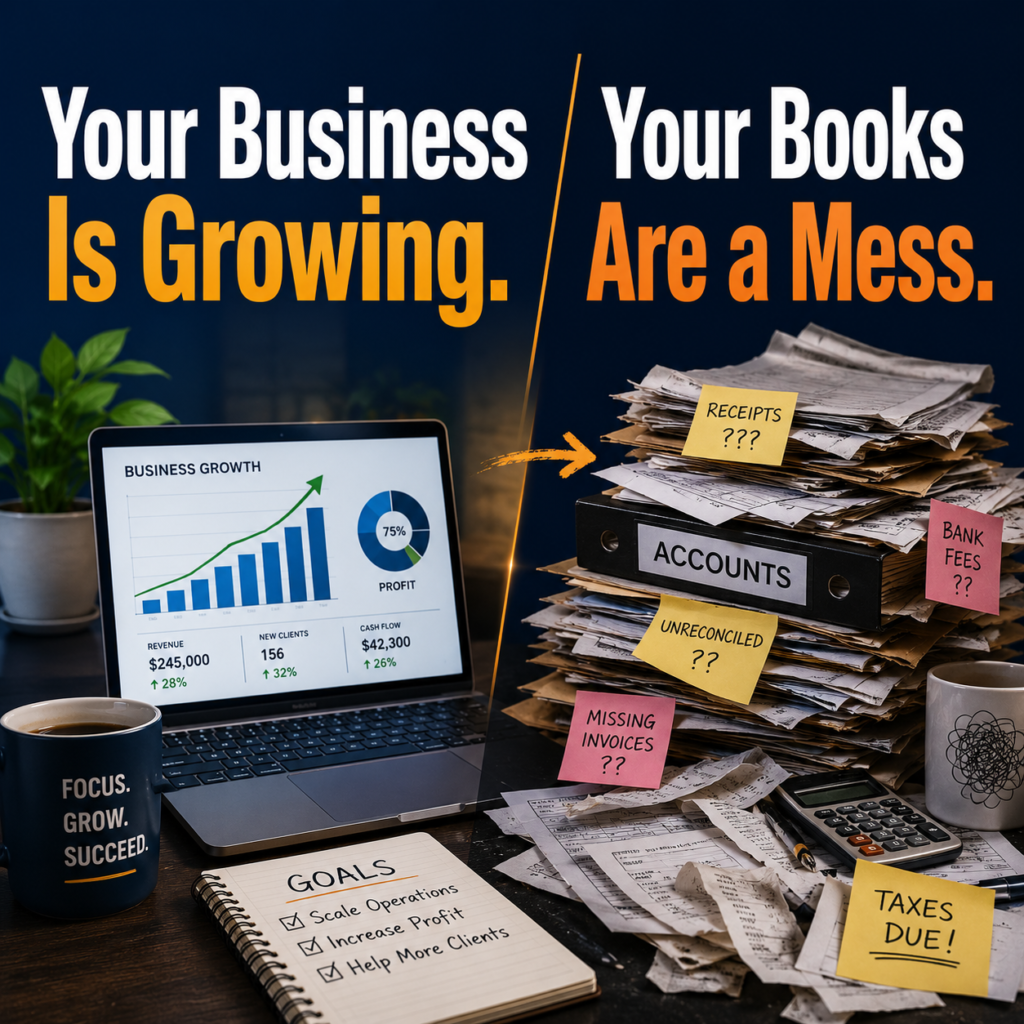
You started your business to do work you’re good at — not to reconcile bank statements at midnight. So bookkeeping gets pushed to weekends. Then to “next month.” Then it just… piles up. Sound familiar?
The truth is, most small business owners don’t realize their books are a problem until they apply for a loan and get denied, face a surprise tax bill, or sit down with their accountant and watch the color drain from the room. Clean books aren’t just an accounting formality — they’re the foundation every smart business decision is built on.
What "Messy Books" Actually Costs You
Most business owners think of bookkeeping errors as a minor inconvenience. In reality, disorganized financials create four very real, very expensive problems:
Higher Tax Bills
When expenses aren’t properly categorized, deductions get missed. That’s money you’ve already spent — but money you’ll pay taxes on anyway.
Loan and Credit Denials
Lenders want clean P&L statements and balance sheets. If your books are behind or inconsistent, your application gets flagged or rejected outright.
Cash Flow Blindspots
You can’t manage what you can’t measure. Businesses that don’t know their real numbers often overspend, underprice, or run out of runway without warning.
Panic at Tax Time
Rushed, catch-up bookkeeping done in January leads to errors — and errors lead to amended returns, penalties, and sometimes audits.
The 3 Bookkeeping Habits That Change Everything
You don’t need a finance degree to keep clean books. You need three consistent habits.
Reconcile Every Month — Without Exception
Bank reconciliation means comparing your bookkeeping records to your actual bank statement and making sure they match. It takes 15–30 minutes when done monthly. It takes days — and a lot of stress — when done once a year. Monthly reconciliation also catches fraud, duplicate charges, and errors before they compound.
Separate Business and Personal Finances Completely
This is the single most common mistake small business owners make — especially in the early years. Running personal expenses through the business account (or vice versa) creates a bookkeeping nightmare, muddies your tax deductions, and can actually pierce the legal protection of your LLC or corporation. Open a dedicated business checking account and business credit card, and use them exclusively for business.
Categorize Transactions in Real Time, Not in Batches
When you let transactions pile up for weeks or months, you forget context. Was that $85 charge a client dinner or a personal meal? Was that Amazon purchase office supplies or something else? Coding transactions weekly — even just 20 minutes on a Friday — keeps your books accurate and your memory fresh. Most accounting software like QuickBooks Online makes this fast with rule-based auto-categorization.
When DIY Bookkeeping Stops Making Sense
Handling your own books makes sense when you’re just starting out and cash is tight. But there’s a tipping point — and most business owners cross it without realizing.
Consider getting professional bookkeeping help when:
- You're spending more than 3–4 hours per month on bookkeeping
- Your revenue has crossed $150,000–$200,000 annually
- You have employees, contractors, or inventory to track
- You've fallen more than 2 months behind on reconciliations
- Your accountant is spending significant time cleaning up your books at tax time
At that point, the cost of professional bookkeeping is almost always less than the time you’re spending on it — and far less than the errors and missed deductions that come with doing it while running a business at the same time.
Clean Books = Confident Decisions
When your books are current and accurate, everything else gets easier. You know exactly where your money is going. You can price your services with confidence. You walk into tax season without dread. And when an opportunity comes up — a new hire, a business loan, a major purchase — you have the numbers to make a real decision instead of a gut-feel guess.
Your books should be working for you. If they’re not, that’s worth fixing — and it’s more straightforward than you think.